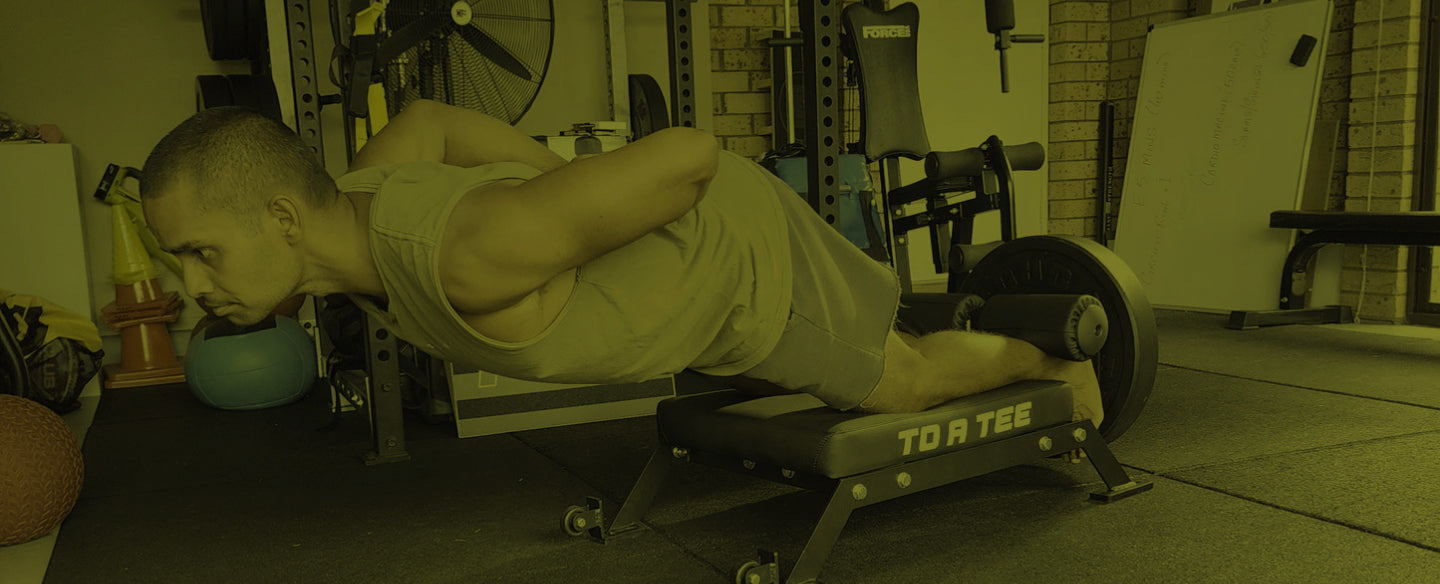
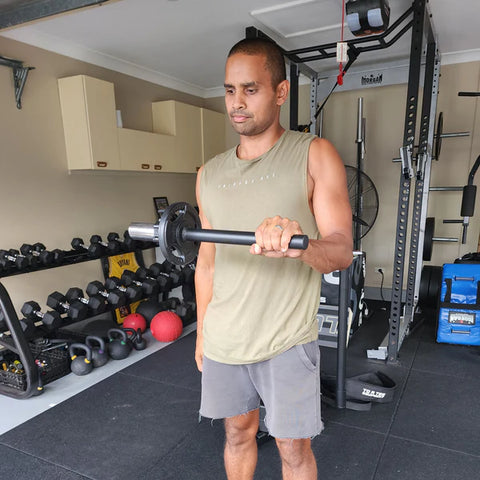
Innovative Uses for the Wrist Bar: Enhance Your Wrist Strength and Flexibility
Explore six innovative exercises using the Wrist Bar to enhance your wrist strength, flexibility,...
If you play soccer — or coach it — you already know how often ankles get rolled.
A quick cut.
An awkward landing.
A tackle from the side.
A planted foot during a strike.
Ankle sprains are one of the most common injuries in football worldwide. And while they’re often brushed off as “just a rolled ankle”, repeated sprains lead to long-term instability, reduced performance and ongoing pain.
The truth is this:
Most ankle injuries aren’t bad luck.
They’re a strength and stability issue.
Let’s break down why soccer players need stronger ankles — and how to build them properly.
Soccer is a multi-directional sport. Unlike straight-line running, football constantly challenges the ankle in different planes.
Players are:
Cutting laterally
Accelerating and decelerating rapidly
Striking the ball off one leg
Landing from headers
Pivoting on a planted foot
Every one of those movements demands:
Eversion control (peroneals)
Inversion control (tibialis posterior)
Dorsiflexion mobility
Forefoot rotational stability
Proprioception under fatigue
When those systems aren’t trained properly, the ankle collapses under load.
That’s when sprains happen.
The classic soccer injury is the inversion sprain.
That’s when the foot rolls outward and the ankle collapses inward — overstretching the lateral ligaments.
What’s usually weak?
Peroneus longus
Peroneus brevis
Lateral stabilisers
Reactive balance control
And here’s the important part:
Once you sprain an ankle, your proprioception (joint awareness) decreases significantly.
That’s why repeat sprains are so common.
The joint doesn’t “feel” instability fast enough to react.
This is where targeted ankle stability training becomes essential.
Side-to-side control is critical in soccer.
Training controlled eversion strengthens the peroneals — the exact muscles responsible for preventing rolled ankles.
Benefit:
Reduces inversion sprain risk during cutting and contact.
Ball striking mechanics place rotational stress through the midfoot and ankle.
If forefoot control is poor, force transfer becomes inefficient and unstable.
Controlled forefoot rotation drills strengthen intrinsic foot muscles and improve stability during striking.
Benefit:
Better ball control and improved stability when shooting or passing.
When a player plants to change direction, the heel must stay controlled.
Rearfoot instability leads to excessive collapse — especially late in games when fatigue sets in.
Training rearfoot control improves heel alignment and joint positioning.
Benefit:
More efficient change of direction and reduced injury risk.
Limited ankle mobility affects:
Sprint mechanics
Squat depth
Landing absorption
Deceleration
Many footballers are tight through the calves and Achilles.
Improving dorsiflexion mobility allows for smoother movement and reduced joint stress.
Benefit:
Better acceleration and safer landings.
Soccer isn’t played in a controlled environment.
Players are fatigued, under pressure and reacting constantly.
Training ankle stability under load prepares the joint for real match conditions.
Squats and single-leg variations on unstable surfaces challenge:
Balance
Strength
Neuromuscular control
Benefit:
Ankles that hold up in the final 10 minutes — not just the first 10.
Standing on one leg isn’t enough.
Elite ankle resilience requires:
Multi-planar instability
Strength under load
Controlled rotation
Reactive training
It’s not about gimmicks.
It’s about exposing the ankle to controlled instability so it adapts.
That’s how you build long-term joint resilience.
Junior footballers still developing
Players returning from ankle sprains
Wingers and fullbacks with high cutting volume
Midfielders covering large distances
Strength coaches programming injury prevention
If you coach youth soccer, ankle stability work should be part of every warm-up block.
Not after injury.
Before it.
Stronger ankles don’t just reduce injury risk.
They improve:
Cutting speed
Acceleration
Deceleration control
Balance in tackles
Shooting stability
In soccer, small improvements in stability translate into noticeable improvements in performance.
And the players who stay healthy are the players who improve the most over time.
Soccer places relentless stress on the ankles.
Ignoring ankle training is like building a house on unstable foundations.
If you want:
Fewer rolled ankles
Stronger change of direction
Better balance under pressure
Long-term durability
Ankle and foot stability training needs to be part of your weekly routine.
Not just when something goes wrong.
Train it early.
Train it consistently.
Build resilience before you need it.
Explore six innovative exercises using the Wrist Bar to enhance your wrist strength, flexibility,...
Ankle mobility is a crucial yet often overlooked aspect of lower body fitness. Whether you're a p...
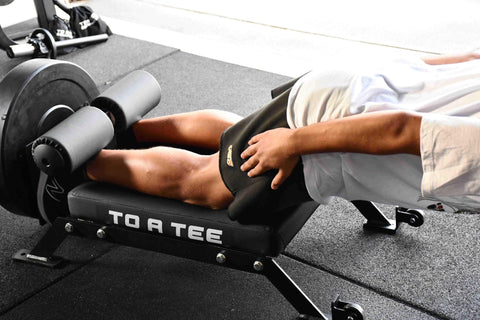
Building robust hamstrings is not just about enhancing your athletic performance; it's about inju...