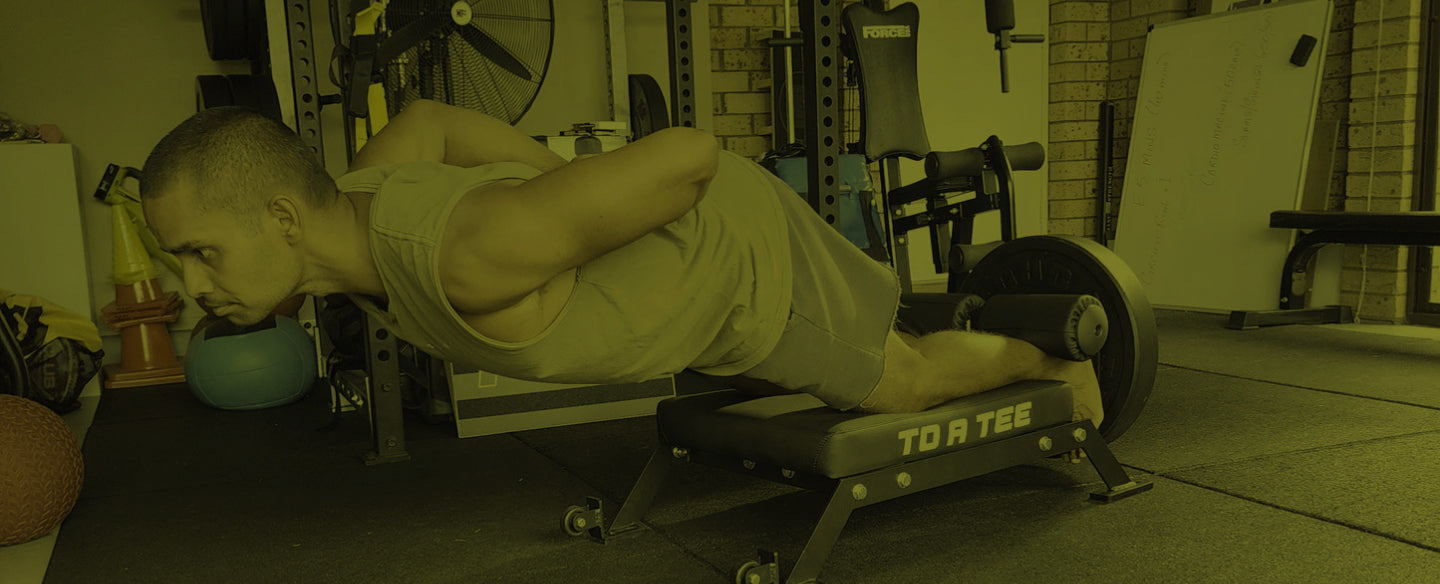
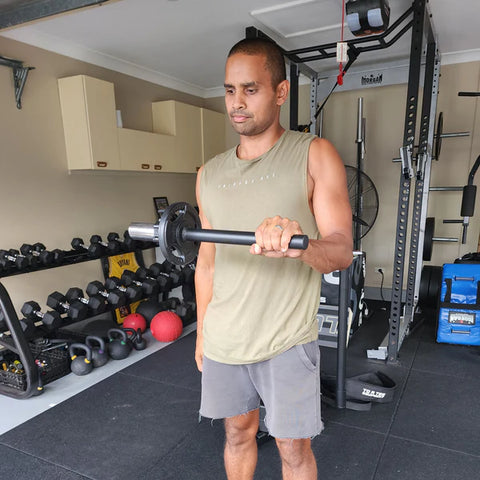
Innovative Uses for the Wrist Bar: Enhance Your Wrist Strength and Flexibility
Explore six innovative exercises using the Wrist Bar to enhance your wrist strength, flexibility,...
When most people think about lower body training, they think quads, glutes and hamstrings.
But if your ankles and feet aren’t strong, stable and mobile, everything above them is compromised.
Whether you're an athlete, a weekend warrior, or someone simply wanting to move pain-free, ankle stability training isn’t optional — it’s foundational.
This is exactly why I developed our Ankle & Foot Stability Board at TAT Equipment. Not just for balance drills, but for targeted strengthening, mobility and injury resilience.
Let’s break down what these exercises actually do, which muscles they target, and why they matter.
Your ankle is responsible for:
Absorbing ground reaction force
Transferring force up the kinetic chain
Decelerating movement
Stabilising during cutting, pivoting and landing
Protecting against inversion sprains
The majority of ankle injuries occur because the peroneals, tibialis posterior and intrinsic foot muscles aren’t strong enough to control rapid movement.
Stability boards introduce controlled instability — forcing the nervous system to adapt and improve proprioception (your body’s awareness in space).
That’s how resilience is built.
Below are the primary ankle and foot stability board variations and what they’re designed to improve.
Targets:
Peroneals
Tibialis posterior
Deep ankle stabilisers
Proprioceptive system
By introducing a 30° pivot, this variation challenges the ankle in multiple planes at once.
This builds neuromuscular control — which is crucial for sport where movement is rarely straight forward and backward.
Benefit:
Improves coordination, reaction time and overall ankle control under unpredictable conditions.
Targets:
Peroneals (eversion)
Tibialis posterior (inversion control)
Lateral ankle ligaments
Side-to-side control is critical for reducing ankle sprain risk.
This setup strengthens the structures responsible for stabilising the ankle when you land awkwardly or change direction quickly.
Benefit:
Reduces inversion sprain risk and improves lateral movement confidence.
Targets:
Peroneus longus
Peroneus brevis
By elevating the lateral edge of the foot, you challenge controlled eversion — strengthening the muscles that protect against rolled ankles.
Benefit:
Improves lateral ankle resilience and reduces re-injury risk post sprain.
Targets:
Tibialis posterior
Medial ankle stabilisers
This setup biases inversion control and strengthens the medial arch support system.
For athletes with collapsed arches or excessive pronation, this is especially important.
Benefit:
Improves arch control and rearfoot alignment.
Targets:
Subtalar joint control
Heel alignment muscles
Deep stabilisers
Here the forefoot remains stable while the rearfoot moves under control.
This trains heel alignment and joint control — something rarely targeted in traditional gym programs.
Benefit:
Improves alignment and reduces compensatory movement up the chain.
Targets:
Intrinsic foot muscles
Midfoot stabilisers
Controlled forefoot rotation improves transverse plane control — essential for running mechanics and cutting.
Benefit:
Enhances midfoot strength and rotational stability.
Targets:
Gastrocnemius
Soleus
Plantar fascia
Improving dorsiflexion mobility allows for better squat depth, improved sprint mechanics and reduced Achilles strain.
Benefit:
Better push-off power and deceleration control.
When squats are performed on an unstable surface, the ankle must stabilise under load.
This builds:
Joint resilience
Strength through range
Balance under fatigue
Benefit:
Stronger, more stable ankles that hold up in sport and daily life.
Athletes returning from ankle sprains
Field and court sport athletes
Runners with recurring ankle tightness
CrossFit athletes
Strength coaches programming injury prevention
Anyone wanting stronger, more resilient lower legs
If you’ve ever rolled an ankle, chances are the stabilisers weren’t strong enough or reactive enough.
The good news? They’re trainable.
At TAT Equipment, I’ve always believed we should be proactive, not reactive.
Ankle injuries don’t just “happen”.
They occur when:
Strength isn’t balanced
Mobility is restricted
Stability hasn’t been trained
Building ankle resilience isn’t complicated — but it needs to be intentional.
Small, consistent stability work makes a massive difference over time.
Strong ankles create:
Better squat mechanics
More explosive sprinting
Safer landings
Reduced injury risk
Improved balance
And most importantly — confidence in movement.
If you’re serious about long-term performance and injury prevention, ankle and foot stability training shouldn’t be an afterthought.
It should be part of your foundation.
Explore six innovative exercises using the Wrist Bar to enhance your wrist strength, flexibility,...
Ankle mobility is a crucial yet often overlooked aspect of lower body fitness. Whether you're a p...
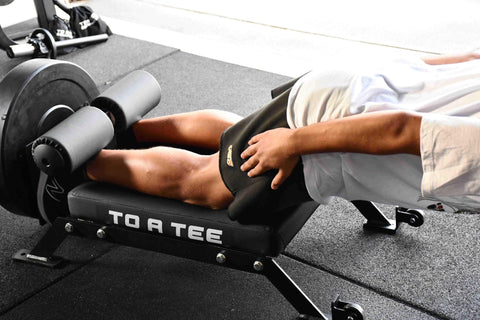
Building robust hamstrings is not just about enhancing your athletic performance; it's about inju...