Innovative Uses for the Wrist Bar: Enhance Your Wrist Strength and Flexibility
Explore six innovative exercises using the Wrist Bar to enhance your wrist strength, flexibility,...
When people talk about injury prevention, the conversation usually starts at the knees or hips. But in my experience — whether working with athletes, coaches, or everyday movers — most issues actually start from the ground up.
Your feet and ankles are your first point of contact with the ground. If they’re weak, stiff, or unstable, the rest of your body is forced to compensate. Over time, that’s when niggles turn into chronic pain.
Shoes do a lot of work for us these days. Cushioned soles, raised heels, and rigid structures all reduce how much your feet actually have to stabilise.
The result?
Reduced ankle mobility
Poor balance and proprioception
Less force absorption through the foot
More stress transferred to knees, hips, and lower back
Strong feet and ankles don’t just help performance — they help longevity.
When ankle stability is lacking, it often shows up as:
Recurrent ankle sprains
Achilles tightness or irritation
Plantar fascia discomfort
Knee pain during running or squatting
Poor balance during single-leg movements
These aren’t isolated problems — they’re symptoms of a system that isn’t doing its job properly.
True ankle strength isn’t just about calf raises.
It’s about:
Controlling movement in multiple directions
Training balance under load
Teaching the foot and ankle to respond to instability
Improving coordination between the foot, ankle, and lower leg
Simple tools and slow, controlled exercises can go a long way here — especially when done consistently.
Short answer: everyone.
But especially:
Athletes in running, field, or court sports
Anyone with a history of ankle sprains
People returning from lower-limb injuries
Anyone looking to improve balance, agility, or joint health
You don’t need to dedicate an entire session to it either. Even 5–10 minutes at the start or end of training makes a difference.
Strong movement starts at the feet. Ignore them, and something up the chain usually pays the price.
If you’re chasing better performance, fewer injuries, or just want to move well for years to come, foot and ankle training shouldn’t be optional — it should be a non-negotiable.
Explore six innovative exercises using the Wrist Bar to enhance your wrist strength, flexibility,...

Ankle mobility is a crucial yet often overlooked aspect of lower body fitness. Whether you're a p...
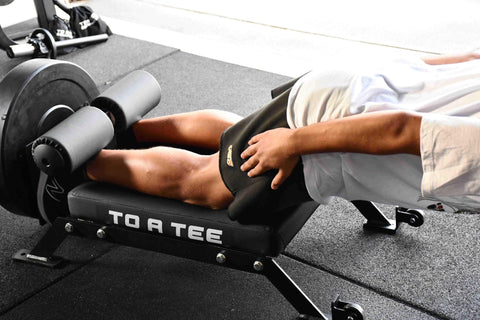
Building robust hamstrings is not just about enhancing your athletic performance; it's about inju...