Innovative Uses for the Wrist Bar: Enhance Your Wrist Strength and Flexibility
Explore six innovative exercises using the Wrist Bar to enhance your wrist strength, flexibility,...
December is one of the hardest times of year to “stay on track”.
Work parties. School concerts. Kids’ sport. Family catch-ups. Random BBQs.
Before you know it, your normal routine has disappeared and your body starts to feel stiff, sore and a bit sluggish.
But here’s the thing: you don’t need a perfect program to stay strong and pain-free over the holidays. You just need a simple plan that fits around real life.
In this blog, I’ll step you through how to holiday-proof your training and your joints so you roll into 2026 feeling ready—not broken.
Most people think the issue is just “eating more and training less”. There’s more going on:
Less movement, more sitting – Long drives, big lunches, extra screen time.
Random spikes in activity – Backyard footy, beach sprints with the kids, one-off big gym sessions.
Sleep all over the place – Late nights, early starts, travel.
Routine disappears – The structure that keeps you consistent suddenly vanishes.
That combination is a perfect storm for:
So instead of trying to run your usual full program, the focus over December and early January should be:
Maintain strength. Keep joints happy. Avoid silly injuries.
If you nail those three, you’ve won the silly season.
Rather than worrying about exact exercises or chasing PBs, I like using a simple three-part framework:
Move the joints – mobility and positions
Load the tissue – strength and control
Balance the body – stability and coordination
You can run this 3–4 times per week in 20–30 minutes, at home or in the gym.
Think of this as your “body wake up”:
Lower Body Mobility (2–4 minutes)
Slant board calf/ankle rocks – 1–2 sets of 20–30 slow reps
Deep slant board squat hold – 1–2 x 30–45 seconds, using support if needed
Hips & Back (2–4 minutes)
Half-kneeling hip flexor stretch – 1–2 x 30 seconds each side
Cat-cow or segmental spine flex/extend – 1–2 sets of 10 reps
If you don’t have a slant board yet, you can elevate the heels on plates or a step—but a proper board makes the angles more repeatable and comfortable, especially if your ankles are already tight.
Here you’re just trying to keep a base level of strength in key areas:
quads, hamstrings, calves, tibialis anterior, hips and core.
You don’t have to smash yourself. Controlled tempo and great technique go a long way.
A1. Slant board squats
3 x 10–15 reps
Slow down, controlled up.
Targets quads, knees and ankles; perfect if you’ve been sitting a lot.
A2. Tib bar raises (or bodyweight tib raises)
3 x 12–20 reps
Focus on smooth reps, full range.
Helps prevent shin splints and supports the ankle and knee.
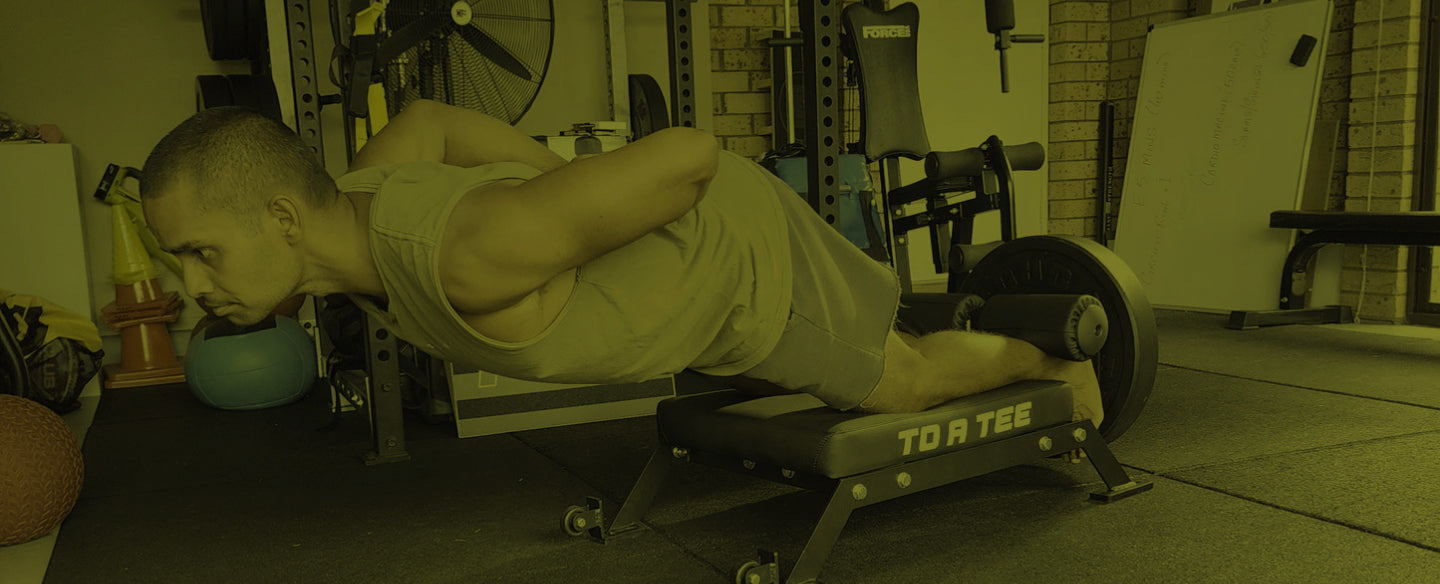
A3. Nordic mini bench hip hinge or banded RDLs
3 x 8–12 reps
Controlled hamstring work keeps the back and knees happier when you suddenly sprint or change direction in a backyard game.
A4. Core plank variation
2–3 x 30–45 seconds
Front plank, side plank or dead bug—whatever you can do well with good form.
Move through these as a circuit with short rests. If you’ve only got 10 minutes, do 2 sets instead of 3 and call it a win.
If you do get to a gym, you can keep it just as simple:
Leg press or front squat – 3 x 6–10
Romanian deadlift or good morning – 3 x 8–10
Calf raises (straight + bent knee) – 2–3 x 12–15
Tib raises – 2–3 x 15–20
Again, you’re not trying to break any records—just reminding your body how to handle load.
The silly season is when awkward “I just twisted funny” injuries happen.
A little bit of stability work goes a long way.
Ankle & Foot Stability
Single-leg balance on the ankle stability board – 2 x 30–45 seconds each side
Progress by adding gentle reaches with the free leg or opposite hand.
Hips & Knees
Step-downs off a small box or step – 2–3 x 8–10 each leg
Focus on knee tracking and smooth control rather than depth.
Upper Body & Grip (optional)
If you’ve been on the computer or your phone a lot, add:
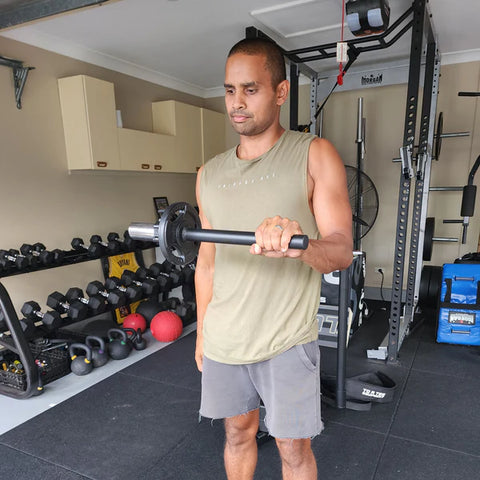
Wrist bar pronation/supination – 2 x 12–15 each way
Farmer carry with dumbbells or power bag – 2 x 20–30 metres
Nothing fancy—just enough to keep your joints honest.
If your normal routine is 4–5 days per week, aim for 3–4 shorter sessions using the framework above.
If your routine is already busy with kids’ sport and work, 2–3 good sessions is plenty.
A simple weekly layout could look like:
Day 1: Lower-body + ankle focus (slant board, tib bar, Nordic work, ankle stability board)
Day 2: Full-body + core (squats/presses/pulls, planks)
Day 3: Optional “pump” or movement day (lighter weights, mobility, easy conditioning like walking or cycling)
The goal isn’t to peak—it’s to maintain strength and joint health so you’re not starting 2026 from scratch.
You’re human. It’s December. Things happen.
If you miss a week:
Don’t panic. You didn’t lose all your gains.
Move gently for a few days – walking, light mobility, short sessions.
Ease back into load – first session back, leave 2–3 reps in the tank on every set.
Most injuries happen when people go from “nothing” straight to “all out” in one session. Give your body a 7–10 day ramp back up and you’ll be fine.
You don’t need a full home gym to do this well. A few key pieces make it easier to stay consistent:
Slant Board or Slant Blocks – for ankles, knees and quad-dominant strength work.
Tib Bar or Single-Leg Tib Bar – to keep the front of the shin strong and protect knees and ankles.
Nordic Mini Bench / Nordic Multi Pro – compact hamstring and posterior chain work that fits easily in a spare room or garage.
Ankle Stability Board – to keep balance, coordination and ankle strength dialled in, especially if you play field or court sports.
Wrist Bar – perfect for keeping wrists, elbows and grip feeling good if you’re on the computer or phone more than usual.
Pick one or two to build a simple, effective holiday setup at home. The idea is to make training as easy and accessible as possible when life gets busy.
If there’s one message I want you to take out of this:
December doesn’t have to be a write-off.
Short, focused sessions that look after your joints and maintain strength can carry you through the holidays without feeling like you’re starting from zero in January.
Train when you can. Move often. Don’t stress about perfection.
Stay consistent enough that your future self—walking into 2026—feels strong, mobile and ready to go.
Explore six innovative exercises using the Wrist Bar to enhance your wrist strength, flexibility,...
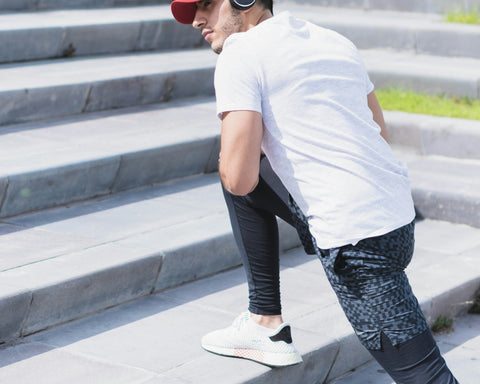
Ankle mobility is a crucial yet often overlooked aspect of lower body fitness. Whether you're a p...
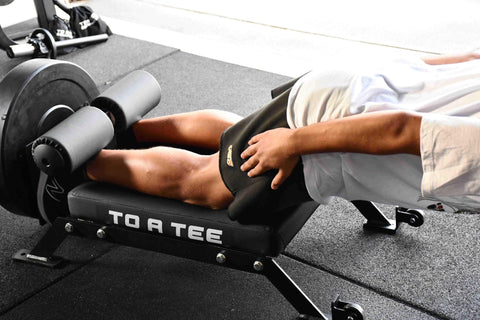
Building robust hamstrings is not just about enhancing your athletic performance; it's about inju...