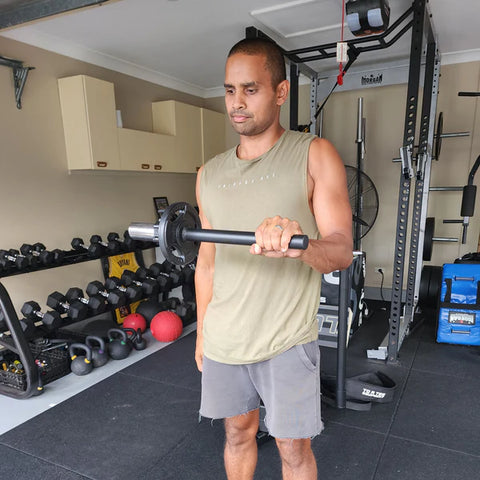
Innovative Uses for the Wrist Bar: Enhance Your Wrist Strength and Flexibility
Explore six innovative exercises using the Wrist Bar to enhance your wrist strength, flexibility,...
If you’ve spent any time around physios, athletes or even high-level gym environments lately, you’ve probably seen someone using a muscle scraper.
It can look a bit aggressive at first — but there’s a reason it’s becoming more common.
Muscle scraping, also known as Instrument Assisted Soft Tissue Mobilisation (IASTM), is one of the simplest ways to improve recovery, reduce tightness and keep your body moving properly.
And no — it’s not just for elite athletes.
Muscle scraping involves using a handheld tool to apply controlled pressure across the skin and underlying muscle tissue.
The goal isn’t to cause damage — it’s to:
Think of it like a more targeted, effective version of foam rolling.
One of the biggest benefits is how quickly it can reduce that “tight” feeling.
If you’re someone dealing with:
Scraping helps free things up so you can actually move better — not just temporarily feel better.
After a hard session, your muscles are under stress.
Muscle scraping helps:
This is key if you’re training multiple times a week or playing sport.
This is where it really fits into what we talk about at TAT.
Muscle scraping can support:
It’s not a magic fix — but it’s a tool that supports everything else you’re doing.
A lot of people overlook this.
When you scrape an area, you become more aware of it.
That awareness can translate into better activation in your training — especially for areas like:
Muscle scraping works best when it’s part of your routine — not something you only do when you’re in pain.
You can use it:
Even 2–5 minutes on a tight area can make a difference.
This is the key point.
Tools like muscle scrapers don’t replace training — they enhance it.
If you:
You get better long-term results.
That’s where combining scraping with strength work (like Nordics, tib raises, or mobility work) makes sense.
Muscle scraping isn’t just a trend — it’s a simple, effective way to take care of your body.
You don’t need to overcomplicate it.
Stay consistent, use it on the areas that need it, and combine it with proper strength work.
This is prehab in action.
Prehab isn’t a replacement — it’s the missing piece of your training.
Explore six innovative exercises using the Wrist Bar to enhance your wrist strength, flexibility,...

Ankle mobility is a crucial yet often overlooked aspect of lower body fitness. Whether you're a p...
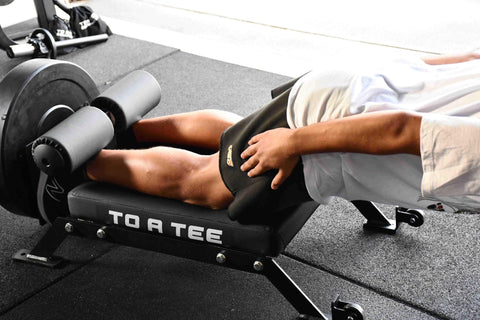
Building robust hamstrings is not just about enhancing your athletic performance; it's about inju...